
Solar Installation Questions Homeowners Often Forget to Ask
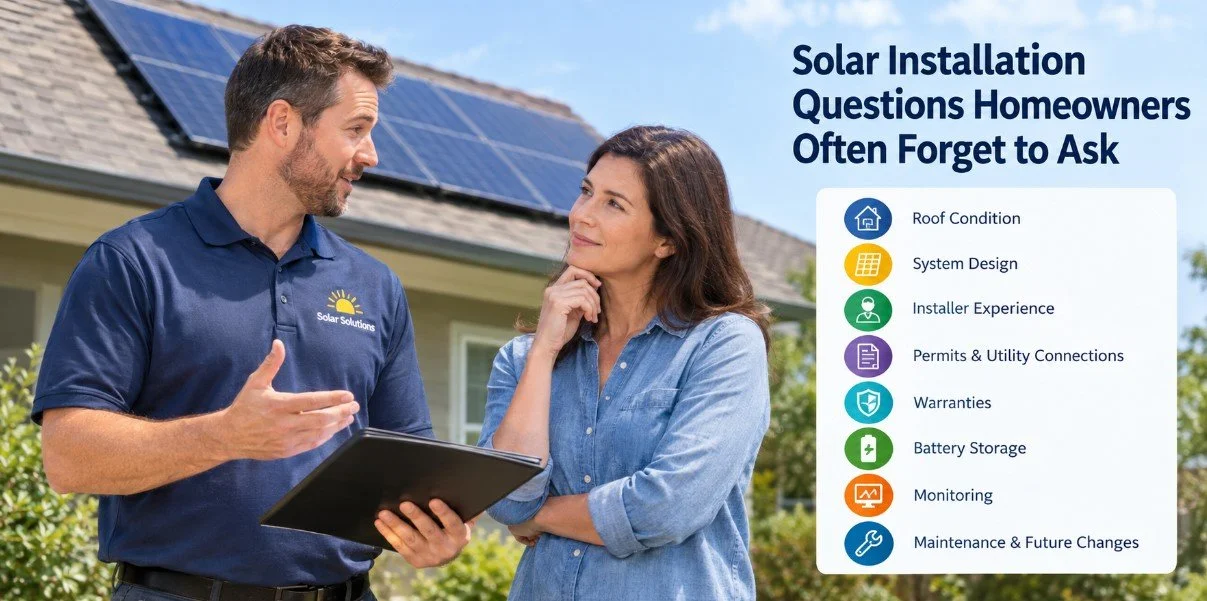
Choosing solar for your home involves more than selecting panels and putting them on the roof. The right questions can help you understand how the system will work, what your property needs, what happens during installation, and how the equipment will be supported afterward. Energy Advantage Roofing & Solar recommends looking beyond the basic proposal so homeowners can understand the full project before moving forward.
Many homeowners remember to ask about panel efficiency and energy production but overlook details involving the roof, electrical system, warranties, monitoring, maintenance, and future home improvements. Asking about these areas early can make the entire process easier to understand.
Start With The Roof
Your roof is the foundation of a rooftop solar project, so its condition deserves attention before equipment is selected. A solar professional should look at the roof's age, condition, structure, slope, available space, and areas that may receive shade.
The Department of Energy recommends considering roof age and potential replacement needs before installing a solar system. Roof shape, slope, direction, and nearby shade can also affect solar production.
Before approving the project, ask these questions:
How old is my roof? Knowing its remaining service life can help you avoid placing a new system on a roof that may need major work soon.
Does my roof need repairs first? Ask whether damaged shingles, flashing, vents, or other issues should be addressed before installation.
Can the roof support the system? Confirm that the roof structure and mounting areas are suitable for the planned equipment.
Will panels affect future roof work? Ask how the system would be handled if part or all of the roof needs repairs later.
How will shade affect production? Trees, chimneys, neighboring structures, and roof features can reduce sunlight reaching panels.
Understand The System Design
A solar proposal can look simple on paper, but the design behind it involves several decisions. Panel placement, inverter selection, roof orientation, available sunlight, electricity use, and future energy needs can all influence the final setup.
A good design should be based on your home rather than simply copying a standard system size. The Department of Energy notes that solar potential depends on factors such as roof direction, shade, roof characteristics, electricity use, and system selection.
Ask the installer to explain the design in plain language:
Why was this system size recommended? Ask how your previous electricity use and expected future needs influenced the recommendation.
Which roof areas will receive panels? Make sure you understand why specific sections were selected or left unused.
How was shade evaluated? Ask whether trees and nearby structures were considered when estimating production.
What type of inverter will be used? The inverter converts the electricity produced by panels into usable household electricity, making its role important to understand.
Can the system be expanded later? Ask whether future panels, battery storage, or other equipment can be added.
Ask About Your Installer's Experience
The equipment matters, but installation quality matters too. A well-designed solar system still needs proper mounting, wiring, electrical connections, weather protection, and code-compliant work.
The Department of Energy recommends checking whether an installer is licensed, bonded, and insured where required and asking about certifications, experience, subcontractors, warranties, and roof responsibilities.
This is also the stage where homeowners should ask about the actual people handling the project:
Who will perform the installation? Find out whether the work will be completed by the company itself or by subcontractors.
Who supervises subcontractors? Ask who is responsible for quality control if outside crews are involved.
How many residential systems have you installed? Experience with similar homes can help you understand the installer's familiarity with residential projects.
Who handles problems after installation? Get a clear contact process for service requests and warranty concerns.
What credentials and insurance do you carry? Ask for documentation rather than relying only on a verbal assurance.
Clarify Local Requirements And Utility Connections
Solar installation is not complete when the panels are physically attached to the roof. Depending on your location and utility, the project may involve permits, inspections, interconnection applications, electrical requirements, and approval before the system can operate as intended.
Utility rules can also affect how excess electricity is treated. The Department of Energy notes that net metering policies, system eligibility, rates, and bill credits vary by state and utility.
If you are researching solar power installers, ask who will manage these administrative steps:
Who pulls the required permits? Confirm whether the installer handles the permitting process or expects you to do it.
Who communicates with the utility? Ask whether the company manages interconnection paperwork and required utility communication.
What inspections are required? Understand which inspections must happen before the system can be activated.
When can the system be turned on? Ask what approvals must be completed before normal operation begins.
What happens if utility requirements change? Confirm how the project will be handled if additional documentation or corrections are requested.
Check The Warranty Details Carefully
Warranties can be easy to skim because they are often buried in technical documents. However, different components may have different warranty terms, and the company installing the system may not be the same company manufacturing the equipment.
You should know what protection applies to panels, inverters, mounting components, workmanship, and other equipment. You should also understand who you contact if something stops working.
Ask for the warranty information in writing:
What does the panel warranty cover? Confirm what defects and performance concerns are included.
What does the inverter warranty cover? Ask about coverage because inverter technology can differ significantly between systems.
Is installation workmanship covered separately? Find out whether the installation company provides its own workmanship coverage.
Who files a manufacturer claim? Ask whether you contact the manufacturer directly or receive assistance from the installer.
What could void the warranty? Understanding exclusions can help you avoid unexpected problems later.
Think About Battery Storage Before Installation
Battery storage is not automatically necessary for every home, but it can be useful depending on your energy goals. Batteries can store electricity for later use and may provide backup power during an outage when the system is designed and configured for that purpose.
Even if you are not adding a battery now, it is worth asking whether your system can accommodate one later. Planning for future storage may affect equipment choices, electrical work, and available installation space.
Consider asking:
Can a battery be added later? Confirm whether the current system is designed with future storage in mind.
What circuits would receive backup power? Ask which essential appliances or areas could operate during an outage.
How does the battery interact with the inverter? Understanding the basic setup can make future upgrades easier to evaluate.
Where would the battery be installed? Ask about available space, safety requirements, and local installation rules.
How is battery performance monitored? Find out whether the same monitoring platform tracks both solar production and storage.
Know What Monitoring Really Shows
A monitoring app can make it easier to see whether your system is producing electricity, but homeowners sometimes assume that a simple production number tells the entire story.
Ask what information the monitoring platform provides and how you will know when production changes unexpectedly. A useful system may provide information about production, equipment status, historical performance, and alerts.
If you are comparing solar installation companies, ask:
Can I monitor production from my phone? Confirm whether the system includes an app or online monitoring portal.
Will I receive system alerts? Ask whether the platform can notify you when equipment experiences an issue.
Can I see historical production? Historical information can help you identify changes in system performance.
Who reviews an equipment alert? Find out whether alerts go to you, the installer, or both.
How do I access my monitoring account? Make sure you receive the necessary login information and account ownership details.
For homeowners interested in how roofing and solar work together, this related guide can provide additional context: solar roofing solutions and system efficiency.
Plan For Maintenance And Future Changes
Solar systems are designed for long-term use, but that does not mean homeowners should never think about maintenance. Panels, wiring, mounting hardware, inverters, and other components may need attention during the life of the system.
It is also smart to consider what happens if you remodel your home, replace your roof, add an electric vehicle, or change your household electricity needs. A system that works well today may need adjustments as your home changes.
Ask these practical questions:
How should the panels be maintained? Ask what routine cleaning or inspections are recommended for your location.
Who handles service calls? Make sure you know how to request assistance if production drops or equipment stops working.
What happens during roof replacement? Ask how panels and mounting equipment would be removed and reinstalled if needed.
Can the system support future energy changes? Discuss additions such as an EV charger, heat pump, or battery.
What records should I keep? Save equipment information, warranties, permits, monitoring details, and installation documents in one place.
Compare What You Are Actually Getting
Solar proposals can use different equipment, system designs, warranties, service arrangements, and production assumptions. Comparing only the number of panels or the overall system size may leave out important differences.
Instead, look at the full scope of the project and ask each installer to explain what is included. This gives you a clearer basis for understanding the proposal without focusing only on one feature.
|
Area To Review |
What To Ask |
|
Roof |
Is the existing roof ready for solar? |
|
System design |
Why was this equipment and layout selected? |
|
Installation |
Who will complete and supervise the work? |
|
Utility process |
Who handles permits, inspections, and interconnection? |
|
Warranty |
What is covered and who handles claims? |
|
Monitoring |
What performance information will I receive? |
|
Storage |
Can battery backup be added now or later? |
|
Service |
Who should I contact if something goes wrong? |
If you are specifically researching solar installation in Denver, local conditions, utility requirements, roof characteristics, and weather exposure should be discussed during the site assessment rather than assumed from a generic proposal.
Avoid Making Decisions From Production Promises Alone
Energy production estimates are useful, but they are still estimates. Solar output can change because of weather, shade, roof orientation, equipment characteristics, system losses, and other site-specific factors.
The Department of Energy recommends using site-specific information when evaluating solar potential rather than relying only on general assumptions.
Before accepting an estimate, ask:
What assumptions were used? Ask which roof areas, sunlight conditions, equipment, and system losses were considered.
Is the estimate based on my actual property? A custom assessment is more useful than a generic production figure.
How could seasonal changes affect output? Ask how production may vary throughout the year.
What happens if production is lower than expected? Understand the company's process for investigating performance concerns.
Can I review the projected production data? Ask for the assumptions and estimated production in writing.
Make Your Solar Questions Count
A solar project becomes easier to understand when you know what to ask before installation begins. The most useful questions often involve areas homeowners initially overlook, including roof condition, system design, utility requirements, warranties, monitoring, battery readiness, maintenance, and future home changes.
Rather than focusing on one specification, look at how the entire system is designed for your property and how it will be supported after installation. Energy Advantage Roofing & Solar can help homeowners explore the roofing and solar considerations that matter when planning a residential project.
If you are ready to discuss your home's solar and roofing needs, contact us today to start the conversation and learn what questions should be addressed for your property.