
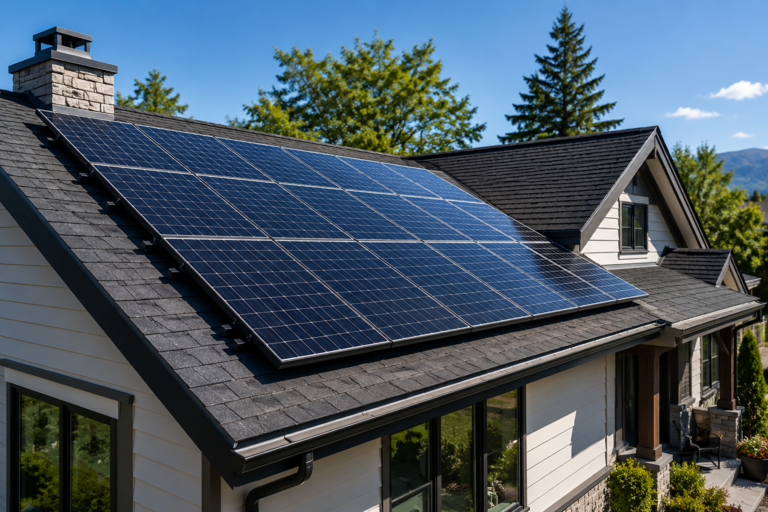
Solar panels can generate clean electricity, but their performance depends on more than the panels themselves. The roof provides the space, support, orientation, and protection needed for the system to work properly. A roof that is structurally sound, free from major shading, properly maintained, and suitable for mounting can help a solar system perform more reliably over time. Energy Advantage Roofing & Solar understands that roofing and solar should be considered together rather than treated as completely separate projects.
When the roof and solar system are planned as one solution, homeowners can reduce installation problems, protect against moisture issues, improve panel positioning, and make future maintenance easier. The goal is simple: create a roof that protects the home while providing a strong foundation for solar energy production.
How Solar Panels And Roofing Work Together
Solar panels and roofing have different jobs, but they need to work as one system. The roof protects the building from weather, while the panels use sunlight to produce electricity.
A properly planned solar installation considers the roof's condition, available space, panel placement, drainage, ventilation, and access for future maintenance. The mounting system then connects the panels to the roof without unnecessarily affecting its protective function.
Solar panels produce direct-current electricity, which an inverter converts into usable alternating-current electricity for the home. In a grid-connected setup, excess electricity can also be sent to the electrical grid when permitted by local requirements. A strong roof helps create a better foundation for this entire process.
The roof provides the installation surface.
The mounting system keeps panels securely positioned.
The panels capture available sunlight.
The inverter converts generated electricity for household use.
The electrical system manages the connection to the home and grid.
This relationship is why solar planning should begin with a close look at the roof rather than starting with panel selection alone.
Why Your Roof Matters For Solar Performance
Your roof has a direct influence on where panels can be installed and how effectively they can receive sunlight. Even high-quality panels cannot perform at their best if they are placed in heavy shade or at an unsuitable angle.
The roof also needs to support the mounting equipment and withstand the additional loads and forces associated with the installation. A professional assessment can identify concerns before work begins.
Roof condition is equally important. If a roof already has damaged materials, moisture problems, weak areas, or aging waterproofing, installing panels before addressing those issues may create complications later.
Sun exposure is another major factor. Government rooftop solar guidance notes that unobstructed sunlight is important because shading can significantly reduce generation.
Roof direction affects the amount of sunlight available.
Roof angle influences panel positioning.
Shade from trees and nearby structures can reduce output.
Roof strength supports safe panel installation.
Good drainage helps protect the roof from moisture problems.
A solar-ready roof is therefore more than an empty space on top of a house.
Choosing The Right Roof For Solar Panels
Different roofing materials can support solar panels, but the installation method may change depending on the roof design. Flat roofs, sloped roofs, metal roofs, and other surfaces each require suitable mounting approaches.
A flat roof can provide flexibility because panels can be placed on mounting structures at an appropriate angle. Sloped roofs may allow panels to follow the existing roof pitch, while metal roofing often requires specialized attachment methods.
Homeowners should also consider working with experienced solar energy installers who can evaluate the roof structure, available space, orientation, and installation requirements before recommending a suitable system.
The condition of the roof should always be considered before installation. If major repairs are already needed, completing those repairs first can make the overall project more practical.
Solar panels are designed for long-term use, so the roof beneath them should be capable of supporting the system for the long term as well. Official rooftop solar guidance states that systems can be installed on different roof types when the roof has sufficient load-bearing capacity.
Flat roofs offer flexibility in panel positioning.
Sloped roofs can simplify panel alignment.
Metal roofs may require specialized mounting hardware.
Older roofs should receive a condition assessment.
Damaged roofing should be addressed before installation.
The best roof is not necessarily the newest or most attractive one. It is the one that can safely and reliably support the planned system.
Smart Mounting For Better Solar Performance
Mounting equipment may not receive as much attention as solar panels, but it plays an important role in the overall installation. The mounting system keeps panels secure while helping maintain the intended angle and layout.
A good mounting plan should account for wind, roof structure, panel spacing, drainage, and maintenance access. It should also avoid creating unnecessary problems for the roofing material.
The exact approach depends on the roof. Some systems use non-penetrating mounting methods, while others require secure attachment points through the roofing assembly. Each method needs to be selected according to the roof structure and installation requirements.
Proper panel spacing can also support airflow beneath the modules. Keeping panels from sitting directly against the roof may help manage heat and provide access for inspection and maintenance.
Secure mounting protects panels from movement.
Proper spacing can support airflow beneath panels.
Good positioning helps maximize available sunlight.
Accessible layouts make future maintenance easier.
Correct hardware helps protect the roof assembly.
The mounting system should be treated as an important part of both solar performance and roof protection.
Protecting The Roof During Solar Installation
One of the biggest concerns homeowners have is whether installing solar panels can damage their roof. The answer depends largely on the quality of the installation and the mounting method.
Any roof penetration must be properly planned and sealed. Poorly handled attachment points can create opportunities for water to enter the roofing system. Even a small moisture problem can become more serious if it is not detected early.
Homeowners choosing a roofing and solar service should ensure that the professionals understand both roofing requirements and solar mounting practices. Coordinating these areas can help protect roofing materials while ensuring the panels are installed correctly.
Installers should also avoid damaging shingles, membranes, flashing, insulation, or other roofing components while moving equipment and installing the mounting structure.
Before installation, it is useful to document existing roof conditions. This creates a clear starting point and makes it easier to identify any future changes.
Inspect the roof before installation begins.
Use mounting hardware designed for the roof type.
Seal required penetrations correctly.
Protect roofing materials while moving equipment.
Keep drainage paths clear after installation.
Solar should improve the home's energy performance without compromising the roof's basic job of keeping the interior dry and protected.
Improving Energy Output Through Roof Design
Solar efficiency is not determined by panel quality alone. The surrounding roof environment can influence how much energy the system produces.
One of the simplest considerations is shade. Water tanks, chimneys, trees, neighboring buildings, and roof structures can cast shadows over panels. Even partial shading can reduce the output of affected modules.
Roof orientation and panel angle also matter. A site assessment can help determine where panels should be positioned based on sunlight patterns throughout the day.
Ventilation can be useful as well. Solar panels can become hot under strong sunlight, and allowing suitable airflow beneath them can help manage operating temperatures. Panel output can vary with temperature, sunlight intensity, equipment quality, orientation, and maintenance.
For homeowners considering energy storage, it is also worth understanding how batteries can work alongside solar generation. Learn why solar battery storage can help lower energy bills.
Reduce unnecessary shading around the panel area.
Position panels where sunlight is strongest.
Allow appropriate airflow around the system.
Keep panels accessible for cleaning and inspection.
Review the layout before installation begins.
Small design decisions can make a meaningful difference in long-term system performance.
How To Prepare Your Roof For Solar Installation
Preparing the roof before installation can make the project smoother and help prevent avoidable problems. The process should start with a detailed inspection rather than immediately placing panels.
First, check the overall condition of the roof. Look for damaged materials, cracks, leaks, loose components, drainage concerns, and signs of moisture intrusion.
Next, review the usable roof area. The entire roof may not be suitable for panels because of shade, equipment, walkways, vents, skylights, or required clearance areas.
When comparing solar installation companies, homeowners should look beyond the panel system itself and consider how thoroughly the company evaluates the existing roof. A proper assessment should consider structural capacity, roof condition, panel placement, mounting requirements, and future maintenance access.
The roof's structural capacity should also be considered. Solar panels and mounting equipment add weight, and the structure needs to safely support the installation.
Inspect the roofing materials for visible damage.
Identify existing leaks before installation.
Measure usable, shade-free roof space.
Check the location of vents and rooftop equipment.
Confirm that the structure can support the planned system.
Once these checks are complete, the solar layout can be designed around the actual condition of the roof.
Common Mistakes To Avoid
Combining roofing and solar can be highly effective, but rushing the planning process can create unnecessary issues. Many problems are avoidable when homeowners look at the roof and solar system together from the beginning.
One common mistake is installing solar over a roof that already needs significant repairs. Removing panels later to access damaged roofing can make future work more complicated.
Another mistake is focusing only on the number of panels instead of the quality of the layout. More panels do not automatically mean better performance if some are heavily shaded or poorly positioned.
Homeowners should also avoid selecting mounting equipment without considering the specific roofing material.
Do not install solar over unresolved roof damage.
Do not ignore shade when planning panel placement.
Do not treat mounting hardware as an afterthought.
Do not block roof drainage or maintenance areas.
Do not overlook future access requirements.
A careful plan usually creates fewer problems than trying to correct installation decisions later.
Pros And Cons Of Combining Roofing With Solar
Planning roofing and solar together can offer several practical advantages. However, homeowners should also understand the potential challenges before deciding how to approach the project.
When the two systems are coordinated, the roof can be prepared specifically for panel placement. This can simplify planning and help reduce conflicts between roofing components and solar equipment.
At the same time, combining projects may require more detailed planning upfront. Different professionals may need to coordinate their work, and the roof structure must be considered alongside the electrical system.
Benefits
Better coordination: Roofing and solar work can be planned as one project.
Improved roof protection: Proper mounting can reduce the risk of moisture issues.
Better panel placement: Roof design can support more effective positioning.
Simpler future maintenance: Access points can be planned before installation.
Long-term planning: The roof and solar system can be considered together.
Potential Challenges
More planning: Multiple aspects of the project need to be coordinated.
Roof limitations: Some roofs may require repairs or structural evaluation first.
Shading concerns: Nearby objects may limit usable panel space.
Access requirements: Maintenance areas need to remain available.
Installation quality: Poor workmanship can affect both the roof and solar system.
Understanding both sides helps homeowners make a more informed decision.
Power Your Home With A Smarter Roof
Solar panels can do much more than sit on top of a house. When the roofing system and solar installation are planned together, homeowners can create a stronger foundation for reliable energy production while protecting the building underneath.
The most effective approach starts with the roof. Check its condition, structure, usable space, shade, drainage, and layout before deciding where panels should go. Then choose mounting and installation methods that support both energy performance and long-term roof protection.
A well-planned system can make better use of available sunlight while keeping future maintenance in mind. Energy Advantage Roofing & Solar can help homeowners think about the roof and solar system as connected parts of the same home improvement strategy.
If you are ready to explore whether your roof is suitable for solar, Contact us today to discuss your roofing and solar needs and take the next step toward a more efficient home energy solution.