
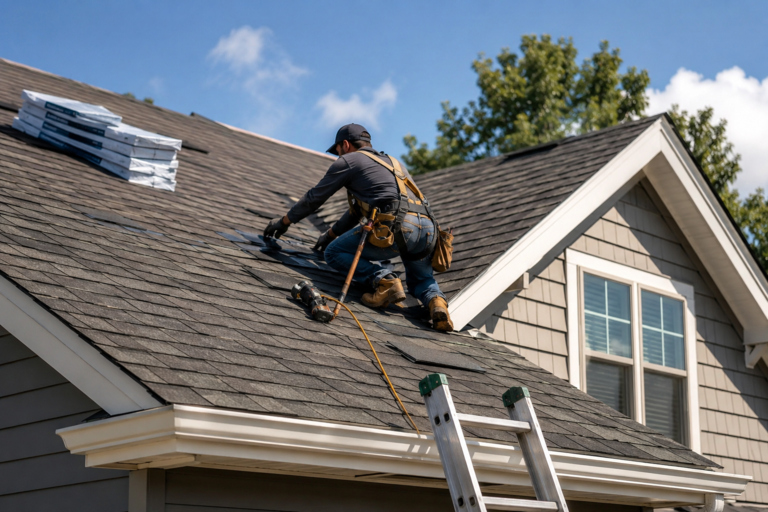
Your roof protects your home from rain, wind, heat, and other weather conditions, making the choice of roofing contractor an important decision. Whether you need a repair, replacement, or new installation, the contractor you hire can directly affect the quality and long-term performance of the work.
Before agreeing to a project, homeowners should ask important questions about the contractor’s credentials, insurance, experience, materials, warranties, project details, cleanup, and communication. A trustworthy contractor should be willing to explain the work clearly, provide relevant documentation, and put important details in writing. Energy Advantage Roofing & Solar understands that having clear information helps homeowners make confident decisions and choose the right professional for their roofing needs.
Quick Answer
Before hiring a roofing contractor, ask about licensing, insurance, experience, references, materials, warranties, permits, project timelines, cleanup, and who will perform the work. You should also request a detailed written proposal that explains what will be done and what is included. Clear answers can help you compare contractors and avoid misunderstandings once the project begins.
1. Are You Licensed And Properly Insured?
Start with the basics before discussing the actual roofing work. Licensing requirements can vary by location, so homeowners should understand what applies where they live.
Insurance is also important because roofing work involves working at heights and can create risks for workers and property. Ask the contractor to provide current documentation rather than relying only on a verbal statement.
Ask what licenses or registrations the company holds.
Request proof of general liability insurance.
Ask whether workers' compensation coverage is in place.
Confirm that the documents are current.
Check whether additional local requirements apply.
A professional contractor should be comfortable answering these questions and showing supporting documentation.
2. How Much Experience Do You Have With My Type Of Roof?
Every roofing system can have different installation and repair requirements. A contractor who regularly works with your specific roof type may be better prepared to identify problems and recommend an appropriate solution.
Ask about previous projects that are similar to yours. You can also ask how the contractor handles common issues such as damaged decking, flashing problems, ventilation concerns, or leaks.
Ask how long the company has been performing roofing work.
Ask about experience with your specific roofing material.
Request examples of similar completed projects.
Ask how common roof problems are identified.
Find out who will supervise the work.
Experience is most useful when it matches the type of project your home actually needs.
3. Can You Explain What Is Wrong With My Roof?
A good inspection should give you a clear explanation of the problem. You should not feel pressured to approve work that you do not understand.
Ask the contractor to show you the areas of concern when possible. Photos can also help you understand what they found, especially when the problem is difficult to see from the ground.
Ask what caused the roofing problem.
Ask whether the issue is isolated or widespread.
Request photos of visible damage when available.
Ask what could happen if the problem is not addressed.
Ask whether repair or replacement is recommended and why.
The goal is to understand the condition of your roof before deciding what work should be done.
4. What Materials Do You Recommend And Why?
Roofing materials can differ in durability, appearance, maintenance needs, and performance. Instead of simply accepting the first recommendation, ask why a particular material is suitable for your home.
A knowledgeable contractor should be able to explain the available options in straightforward language. They should also explain which components will be used along with the main roofing material.
For homeowners researching a project, this guide on top questions to ask before hiring a residential roofing contractor can provide additional questions to discuss during the hiring process.
Ask which roofing materials are being proposed.
Ask why those materials suit your roof.
Ask what underlayment will be used.
Ask how flashing and ventilation will be handled.
Confirm the materials in the written proposal.
Specific material information makes it easier to understand what you are actually hiring the contractor to install.
5. Will You Provide A Detailed Written Proposal?
A written proposal gives both you and the contractor something clear to refer to throughout the project. It should explain the scope of work rather than simply providing a general description.
Read the proposal carefully before signing it. If something was discussed verbally but does not appear in the document, ask for clarification.
Look for a clear description of the work.
Check which materials are included.
Confirm what areas of the roof will be addressed.
Ask how unexpected issues will be handled.
Make sure important agreements are documented.
A detailed proposal can reduce confusion and make it easier to compare different contractors fairly.
6. Who Will Actually Perform The Roofing Work?
The person you speak with during the estimate may not be the person working on your roof. Some companies use their own employees, while others may use subcontractors.
Knowing who will perform the work helps you understand who will be responsible for the project on site.
Ask whether the crew consists of employees or subcontractors.
Ask who will supervise the crew.
Find out who your main contact will be.
Ask how you can raise concerns during the project.
Confirm who is responsible for coordinating the work.
Clear communication becomes much easier when you know who is responsible at each stage.
7. Will You Handle Permits And Required Inspections?
Some roofing projects may require permits or inspections depending on the location and type of work. Do not assume that the homeowner is automatically responsible for these requirements.
Ask the contractor who will obtain any necessary permits and whether inspections are part of the process.
Ask whether a permit is required.
Confirm who will apply for it.
Ask whether required inspections are included.
Request copies of relevant permit documents when appropriate.
Ask how code requirements will be addressed.
Having this conversation before work begins can help prevent avoidable issues later.
8. What Does The Warranty Cover?
A roofing warranty can include different types of protection, so make sure you understand what is actually covered. Material warranties and workmanship warranties may have different terms and conditions.
Do not rely on a general statement such as “the roof is under warranty.” Ask for the details in writing.
Ask what the workmanship warranty covers.
Ask what the manufacturer's warranty covers.
Find out what could void the warranty.
Ask how warranty claims are handled.
Keep copies of all warranty documents.
Understanding warranty coverage before hiring helps you know what support may be available if a problem develops later.
9. Can You Provide Recent References Or Examples Of Your Work?
Past work can give you a better idea of what to expect. Ask for recent examples that are similar to your roofing project.
When speaking with references, focus on practical questions rather than simply asking whether they liked the contractor.
Ask whether the project stayed organized.
Ask how communication was handled.
Ask whether the crew treated the property carefully.
Ask whether the completed work matched expectations.
Ask whether problems were addressed promptly.
Real experiences can provide useful insight that a sales conversation may not reveal.
10. How Will You Protect My Property During The Project?
Roofing work can involve falling debris, tools, materials, and foot traffic around your property. Ask how the crew plans to protect landscaping, siding, windows, driveways, and other areas.
You should also ask how cleanup will be handled once the work is finished.
Ask how landscaping will be protected.
Ask how roofing debris will be collected.
Confirm who handles final cleanup.
Ask whether nails and other small debris will be checked for.
Ask how damaged property would be handled.
A well-organized cleanup plan shows that the contractor is thinking about the entire project, not just the roof.
11. What Happens If You Find Additional Damage?
Roofing projects can sometimes uncover problems that were not visible during the initial inspection. For example, damaged decking or hidden moisture may only become apparent after materials are removed.
Ask how the contractor handles these situations before work starts.
Ask how unexpected damage will be documented.
Find out whether you will be contacted before additional work.
Ask for revised work details in writing.
Confirm who approves changes.
Avoid relying on verbal agreements for major changes.
Knowing the process in advance can prevent disagreements if the scope of work needs to change.
12. What Is The Expected Project Schedule?
A clear schedule helps you prepare your household for the work. Weather and material availability can affect roofing projects, so ask how the contractor handles changes.
Instead of focusing only on a specific completion date, ask how the project will be organized from beginning to end.
Ask when the work is expected to begin.
Ask what factors could affect the schedule.
Ask how weather delays will be communicated.
Ask how long each major stage should take.
Confirm the expected completion process.
Good communication about scheduling can make the project much less stressful.
13. Do You Offer A Residential Roofing Service That Fits My Needs?
Not every roofing repair company handles every type of residential project in the same way. Some may focus heavily on replacements, while others may also handle repairs, inspections, maintenance, or related roofing work.
Ask the contractor to explain exactly which services are appropriate for your situation rather than assuming you need the most extensive option.
Ask what type of roofing work your property needs.
Ask whether repair is a reasonable option.
Confirm what areas are included in the service.
Ask how the recommended solution addresses the underlying issue.
Make sure the selected service is clearly described in writing.
The right service should match the condition of your roof and the actual problem being addressed.
14. How Do You Handle Residential Roof Repairs?
If your roof has a leak or localized damage, ask the contractor how they plan to identify and correct the underlying issue. A surface-level fix may not address the actual source of a roofing problem.
A clear explanation can help you understand what the contractor is repairing and why.
Ask how the leak or damage will be located.
Ask what materials will be used for the repair.
Ask whether nearby areas will be inspected.
Ask how the repair will be checked after completion.
Confirm what repair work is included.
This conversation can help you avoid misunderstandings about what a repair is intended to accomplish.
15. Are You Familiar With Local Roofing Requirements?
Local conditions and building requirements can influence roofing work. Homeowners should choose a contractor who understands the requirements that apply to the property.
For example, homeowners looking for roofing contractors in Denver may want to ask about local building requirements, weather considerations, and roofing practices relevant to the area.
Ask whether the contractor regularly works in your area.
Ask how local requirements are addressed.
Confirm who handles required documentation.
Ask whether weather conditions affect material selection.
Request clear explanations when local requirements affect the project.
Local knowledge can help make the process smoother and reduce avoidable surprises.
Red Flags To Watch For Before Signing
The answers you receive matter, but so does the way a contractor responds. A professional should not make you feel uncomfortable for asking reasonable questions.
Pay attention if someone avoids providing documentation, gives vague answers, refuses to put important details in writing, or pressures you to make a decision immediately.
Be cautious about unclear contracts.
Be careful when credentials cannot be verified.
Watch for pressure to sign immediately.
Question vague descriptions of materials.
Be cautious when important promises are only verbal.
One concerning answer does not always tell the whole story, but several warning signs should encourage you to slow down and compare other options.
A Simple Way To Compare Roofing Contractors
Once you have spoken with several contractors, compare their answers instead of looking at only one part of their proposals. A contractor who appears attractive at first may not offer the same scope, materials, warranty, or level of communication as another.
Create a simple checklist and record the answers you receive. This makes it easier to spot missing information and ask follow-up questions.
Compare credentials and insurance.
Compare the proposed scope of work.
Compare material specifications.
Compare warranty information.
Compare communication and project procedures.
The best choice is usually the contractor whose overall proposal is clear, complete, and appropriate for your home's needs.
Make Your Roofing Decision With Confidence
Hiring a roofing contractor does not have to feel overwhelming. When you ask the right questions, you can better understand the condition of your roof, the proposed work, the materials, the warranty, and the responsibilities of everyone involved.
Take your time, review the written details, and do not be afraid to ask for clarification. Energy Advantage Roofing & Solar believes homeowners deserve clear information so they can feel confident about their roofing decisions. Contact us today to discuss your roofing needs and get answers to your questions before moving forward with your project.