
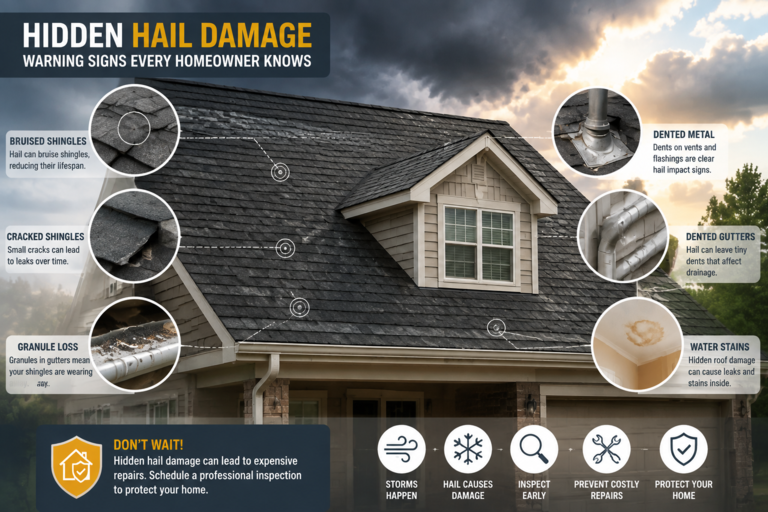
Hailstorms can leave behind more damage than most homeowners realize. While large dents and broken shingles are easy to notice, many roofing problems remain hidden until they begin affecting your home's structure. Energy Advantage Roofing & Solar understands that identifying roof issues early can help homeowners protect their property and avoid more extensive repairs later. Knowing what to look for after a storm allows you to take action before small concerns become serious roofing problems.
Not every hailstorm causes visible destruction, but even minor impacts can weaken roofing materials over time. Learning how to recognize subtle warning signs is one of the best ways to keep your roof performing as it should through every season.
Why Hail Damage Is Not Always Easy To See
Many homeowners expect hail damage to be obvious, but that is not always the case. Roofing materials are designed to withstand harsh weather, which means some damage remains hidden beneath the surface. A roof may appear to be in good condition while small fractures or weakened materials continue to deteriorate.
Weather conditions, roof age, and the size of hail all influence how damage appears. Some problems may not become noticeable until months after the storm, especially when rain, sunlight, and changing temperatures continue to affect weakened areas.
Understanding that hidden damage exists encourages homeowners to schedule inspections rather than relying only on visual observations from the ground.
Common reasons damage goes unnoticed include:
Small hail impacts may not create visible cracks immediately.
Roofing granules can loosen without obvious signs from below.
Minor dents often blend into existing roof textures.
Moisture can enter through tiny openings over time.
Damage may develop gradually after repeated weather exposure.
Surface appearance does not always reflect structural condition.
Early Warning Signs That Should Never Be Ignored
A roof often provides subtle clues before larger problems develop. Paying attention to these warning signs can help homeowners identify potential storm damage before leaks or structural concerns appear.
Even if your roof looks normal after a storm, changes around your home may indicate hidden issues. Gutters, ceilings, attic spaces, and exterior surfaces all provide useful information about the overall condition of your roofing system.
Performing simple visual checks from a safe location after severe weather helps you recognize changes that deserve professional attention.
Signs worth watching include:
Missing or displaced roofing granules around downspouts.
Small dents on gutters, flashing, or roof vents.
Water stains appearing on ceilings or walls.
Damp insulation inside attic spaces.
Loose or lifted shingles after strong storms.
Unusual debris collecting around the property.
Professional Roof Inspections Offer Greater Confidence
While homeowners can identify some warning signs, a professional inspection provides a much more detailed evaluation. Roofing specialists understand where hail typically causes damage and know how to identify issues that remain hidden beneath the surface.
An inspection also creates documentation of your roof's condition, making it easier to monitor future changes. If repairs become necessary, early identification often helps reduce the risk of additional deterioration caused by ongoing weather exposure.
If you believe your home may need roof repair in Denver, scheduling an inspection soon after a significant storm can help determine whether any action is necessary before the damage becomes more serious.
Benefits of professional inspections include:
Detect hidden damage that homeowners may overlook.
Evaluate the condition of shingles and flashing carefully.
Identify moisture intrusion before interior damage occurs.
Provide documentation of current roof conditions.
Recommend appropriate maintenance when needed.
Support long-term roof performance through early detection.
Different Roofing Materials Respond Differently To Hail
Every roofing material reacts differently when struck by hail. Asphalt shingles, metal roofing, tile, and composite products each have unique strengths and vulnerabilities depending on their construction and age.
Some materials show dents immediately, while others develop small cracks that gradually expand with changing temperatures. Older roofs may also experience more noticeable damage because years of weather exposure naturally reduce material flexibility.
Understanding how your roofing system responds to storms helps homeowners make informed decisions about inspections and maintenance. Regular evaluations ensure roofing materials continue protecting the home effectively.
For more helpful information about storm-related roof concerns, read our guide: Could the Last Hailstorm Have Damaged Your Roof Without You Knowing?
Material performance can vary based on:
The age and condition of the roof.
The size and speed of hailstones.
Previous weather exposure throughout the year.
Installation quality of roofing materials.
Overall roof maintenance history.
The angle of hail impact during the storm.
Regular Maintenance Helps Prevent Bigger Problems
Routine roof maintenance plays an important role in reducing long-term storm damage. Even when no obvious problems exist, scheduled inspections allow homeowners to monitor the condition of their roofing system and address minor concerns before they grow.
Keeping gutters clean, removing debris, and checking visible roofing components after storms all contribute to better roof performance. Preventive maintenance also helps identify issues unrelated to hail that could affect the roof's lifespan.
Homeowners considering residential roof repairs should not wait until leaks appear. Addressing small concerns early helps maintain the integrity of the entire roofing system while supporting long-term protection.
Good maintenance habits include:
Inspect your roof after severe weather events.
Keep gutters free from leaves and debris.
Trim tree branches hanging over the roof.
Watch for changes inside attic spaces.
Schedule periodic professional roof evaluations.
Address minor concerns before they expand.
Taking Quick Action Can Protect Your Home
Once hidden roof damage is discovered, acting quickly can help prevent additional problems. Small areas of damage often become larger concerns when they are exposed to rain, wind, snow, and changing temperatures. What begins as a minor issue may eventually affect insulation, ceilings, walls, or other structural components.
Responding early also gives homeowners more flexibility when planning maintenance or repairs. Instead of waiting until a leak appears, proactive care helps maintain the overall condition of the roofing system.
If you believe your roof may have been affected by a recent storm, arranging a residential roofing service allows experienced professionals to evaluate the condition of your roof and recommend the next steps.
Reasons to act sooner rather than later include:
Prevent moisture from reaching the interior of the home.
Reduce the chance of damage spreading to surrounding materials.
Preserve the performance of roofing components.
Maintain the structural integrity of the roof.
Improve long term protection against future storms.
Gain peace of mind through a professional assessment.
Choosing The Right Roofing Team Makes A Difference
Selecting an experienced roofing company is an important part of protecting your investment. Not every issue can be identified through a simple visual inspection, so working with professionals who understand storm damage provides greater confidence throughout the inspection process.
A dependable roofing company will perform a thorough evaluation, explain its findings clearly, and recommend solutions based on the condition of your roof. Good communication and attention to detail help homeowners make informed decisions without unnecessary confusion.
When searching for local roofing contractors, choose a company with experience evaluating hail damage, strong customer reviews, and a commitment to quality workmanship.
Qualities to look for include:
Experience with storm damage inspections.
Clear communication throughout the process.
Detailed roof evaluations and documentation.
Knowledge of different roofing materials.
Reliable workmanship backed by professional standards.
A strong reputation within the local community.
Protect Your Roof Before Small Problems Become Bigger Ones
Your roof protects everything inside your home, making regular inspections one of the smartest investments you can make after severe weather. Hidden hail damage is not always easy to recognize, but early attention can help prevent more extensive issues in the future.
Whether your roof experienced a major hailstorm or only minor impacts, staying proactive helps extend its lifespan and improve its performance through every season. Energy Advantage Roofing & Solar is committed to helping homeowners understand the condition of their roofs and make informed decisions about protecting their property. Contact us today to schedule a professional roof inspection and learn how early detection can help safeguard your home from hidden storm damage before it becomes a larger roofing concern.