
Where Should A Home Solar Battery Be Installed? Key Planning Factors
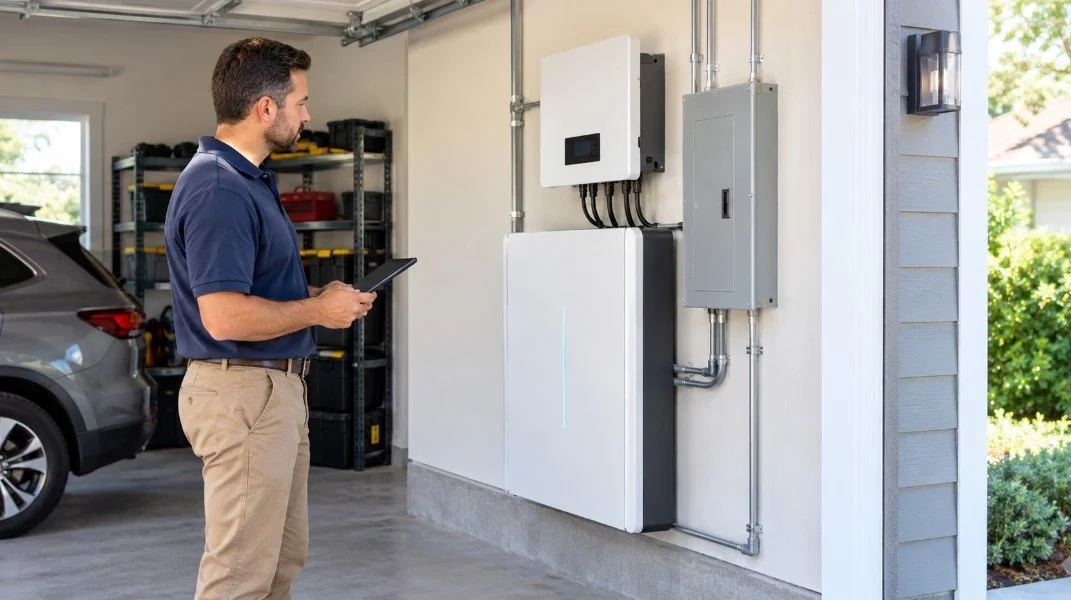
Choosing a location for a home solar battery is about more than finding an empty wall or corner. The location can affect safety, temperature control, electrical connections, maintenance access, and long-term performance.
A garage, utility area, basement, or suitable exterior wall may work depending on the battery model and the property. Manufacturer requirements and local electrical and fire regulations also need to be considered before installation.
A good location should provide enough space, suitable temperatures, protection from water and physical damage, and convenient access for future servicing. Energy Advantage Roofing & Solar can help homeowners evaluate these factors as part of the planning process.
Short Answer
A home solar battery should be installed in a location that meets the manufacturer's requirements and applicable local safety rules while keeping the equipment protected, accessible, and reasonably close to the electrical equipment it needs to connect with.
For many homes, a garage or suitable exterior wall can be practical choices. A utility area or other dedicated space may also work when it provides enough clearance and suitable environmental conditions.
The ideal spot should not be selected based only on appearance or convenience. Temperature, moisture, ventilation, mounting strength, wiring distance, physical protection, and service access all matter.
Outdoor placement can also be suitable when the battery is specifically designed for outdoor use and the location provides appropriate protection from weather and direct sunlight.
The final decision should be based on the exact battery model, property layout, electrical system, and local requirements rather than a one-size-fits-all rule.
Start With The Property, Not The Battery
Before choosing a wall or room, look at how your property is laid out. The available space around your electrical panel, inverter, garage, exterior walls, and other equipment can quickly narrow down the realistic options.
A professional site assessment can identify potential locations before installation planning goes too far. This can help prevent choosing a spot that later needs to be changed because of access, clearance, temperature, or electrical limitations.
The location should also work for your household over the long term. A space that looks empty today may become difficult to access after adding storage shelves, appliances, vehicles, or other equipment.
Check the surrounding space: Make sure the proposed location leaves enough room for safe operation and servicing.
Look at nearby equipment: Doors, windows, vents, heating equipment, electrical equipment, and gas-related equipment can affect placement.
Consider daily use: Avoid choosing a location that regularly gets blocked by vehicles, boxes, tools, or household items.
Think about future access: Installers and electricians should be able to reach the battery without major obstacles.
Review the mounting surface: The wall, floor, or supporting structure needs to be appropriate for the selected system.
Planning the location early can make the entire project more straightforward because electrical connections, mounting requirements, and access can be considered together.
Garage Placement Can Be Practical
A garage is often considered for a home battery because it can provide shelter from direct weather exposure while keeping the equipment relatively close to the electrical system.
However, not every garage is automatically suitable. Garages can experience significant temperature changes, and they may also contain vehicles, tools, chemicals, boxes, and other objects that can interfere with the required space around the equipment.
The battery also needs to remain accessible after installation. A location that works when the garage is empty may become inconvenient once vehicles and storage items are added.
Watch temperature changes: Check whether the garage remains within the battery manufacturer's permitted operating range.
Keep the area clear: Do not allow boxes, tools, or other stored items to block required access or clearances.
Consider vehicle movement: A battery may need protection if it could be exposed to accidental vehicle impact.
Choose a suitable wall: The mounting surface should be strong enough for the selected equipment and mounting method.
Plan around existing equipment: Keep appropriate separation from appliances, heating equipment, and other systems.
A garage can be a practical choice, but the actual conditions inside the garage should determine whether it is suitable rather than assuming that every garage will work.
Exterior Walls Can Offer Another Option
Some homeowners prefer placing the battery outside to preserve indoor or garage space. This can work when the selected battery is approved for outdoor use and the proposed location meets the required installation conditions.
An exterior wall can provide easy access and may offer a shorter route to electrical equipment. However, outdoor equipment has to deal with conditions that do not affect an indoor installation in the same way.
Direct sunlight, rain, snow, humidity, extreme heat, freezing conditions, and physical exposure should all be considered before selecting an outdoor location.
Check outdoor approval: Confirm that the specific battery model is designed and approved for outdoor installation.
Avoid direct sunlight: A shaded or appropriately protected location can help manage temperature exposure.
Protect against weather: The enclosure and mounting arrangement need to suit the local environment.
Check nearby openings: Doors, windows, vents, and other openings can affect the permitted location.
Consider security: Outdoor placement should reduce unnecessary exposure to accidental damage or interference.
The manufacturer's installation instructions should always take priority for product-specific requirements, while local regulations determine what is permitted at the property.
Temperature And Ventilation Matter
Temperature is one of the most important planning factors because batteries operate within specific environmental limits. A location that becomes extremely hot or cold can affect how the system operates and may influence long-term battery performance.
This does not mean a battery always needs a temperature-controlled room. It means the selected location should be checked against the operating requirements for the exact system being installed.
Ventilation and airflow also need attention. The battery should not be squeezed into a small enclosed area simply because it fits physically.
Check the operating range: Compare the property's expected temperatures with the manufacturer's requirements.
Avoid heat sources: Keep the battery away from equipment that produces significant heat.
Do not block airflow: Follow the manufacturer's spacing and ventilation requirements.
Consider seasonal changes: A location should remain suitable throughout the year.
Watch enclosed spaces: Small cupboards or crowded utility areas may not provide adequate conditions.
A site that feels comfortable to people is not automatically suitable for battery equipment, so product-specific requirements should guide the final decision.
Electrical Connections And Cable Routing
The distance between the battery, inverter, electrical panel, and other system components can influence the design of the installation. A location that is far away from the existing electrical equipment may require a more complicated cable route.
This does not mean the battery must always be installed directly beside the electrical panel. The installer needs to consider the complete electrical layout and determine a practical connection route.
During battery storage installation, the installer can assess cable paths, existing equipment, wall construction, access points, and the location of the main electrical equipment.
Map the cable route: Identify how cables can safely travel between the battery and connected equipment.
Review existing equipment: Consider the position of the inverter, electrical panel, and other relevant components.
Avoid unnecessary complexity: A practical location can simplify the overall installation design.
Check wall access: Construction materials may affect how electrical work can be completed.
Plan for future servicing: Keep connection points accessible for inspection and maintenance.
The best location is therefore not necessarily the closest spot. It is the location that provides a practical balance between safety, accessibility, electrical design, and the property's physical layout.
Safety Clearances Should Guide The Layout
A battery should never be installed simply because there is enough physical space for the equipment itself. There also needs to be appropriate space around it based on the manufacturer's instructions and applicable local requirements.
Clearance requirements can vary depending on the battery, installation type, property layout, and regulations that apply in the area. Doors, windows, escape routes, combustible materials, and other equipment may influence the final position.
Professional solar battery installers should assess these conditions before finalizing the installation location rather than treating clearance as an afterthought.
Leave required working space: Follow the exact clearance instructions for the selected battery.
Consider escape routes: Do not place equipment where it could interfere with safe movement through the property.
Review nearby openings: Doors, windows, vents, and other openings may affect placement.
Protect against impact: Areas exposed to vehicles or falling objects may require additional protection.
Keep combustible clutter away: Maintain the required clear area around the system after installation.
Because requirements vary by product and jurisdiction, homeowners should avoid relying on a generic measurement found online. The actual installation documentation and local requirements should be checked for the proposed system.
Think About Maintenance Before Installation
A battery is designed to operate for years, so the location should remain practical long after installation day. Easy access can make future inspections, servicing, troubleshooting, and system upgrades simpler.
This is particularly important when a battery is placed behind storage items or inside an area that becomes difficult to reach. A location that looks neat initially may create problems later if household use changes.
When reviewing your options, think about what the area will look like five or ten years from now rather than only how it looks today.
Keep access open: Do not position permanent storage directly around the equipment.
Consider technician access: Leave enough working room for qualified professionals.
Think beyond installation day: Make sure the location remains practical as your household changes.
Review nearby appliances: Avoid creating a crowded equipment zone.
Keep the area easy to inspect: A visible and accessible battery makes routine checks simpler.
Good planning can help prevent a situation where a technician has to move household belongings just to reach the battery.
For homeowners also considering how energy storage can affect household electricity use, read Why Solar Battery Storage Is The Key To Lower Energy Bills to explore the broader role of battery storage.
Consider Moisture, Water, And Flood Risk
Water exposure is another important factor when selecting a location. A battery should not be placed where leaks, flooding, standing water, or excessive moisture could create a problem.
Basements and outdoor locations may require additional consideration depending on the property's drainage, climate, and construction. Even a generally dry area should be reviewed for possible water exposure.
The battery's enclosure rating and manufacturer instructions should also be checked when evaluating an outdoor location.
Check for leaks: Look above and around the proposed location for plumbing or roof-related water risks.
Review flood exposure: Avoid areas where water could collect during severe weather.
Consider drainage: Outdoor installations should be positioned appropriately for local conditions.
Protect against moisture: Follow the equipment's environmental and enclosure requirements.
Avoid damp storage areas: Persistent humidity may make some locations unsuitable.
These checks are especially useful before committing to a location because moving electrical equipment later can create unnecessary complications.
How Home Layout Can Affect The Final Decision
Every property has different constraints. A large garage may provide several options, while a smaller home may require careful consideration of an exterior wall or dedicated utility space.
The location of the electrical panel, roof-mounted solar equipment, inverter, garage, exterior walls, and available service space can all influence the final design.
If multiple locations appear possible, compare them based on practical requirements rather than choosing the one that looks best visually.
Review the whole property: Consider indoor and outdoor options before settling on one location.
Compare access: Look at how easily each location can be reached for installation and servicing.
Consider electrical layout: Review the distance between major system components.
Check environmental conditions: Compare heat, cold, moisture, sunlight, and exposure.
Think about household use: Choose a location that will remain practical for everyday life.
This approach helps turn battery placement from a simple space-saving decision into a complete installation-planning decision.
What To Ask Before Finalizing The Location
Before approving a proposed battery location, homeowners should have a clear conversation with the installer. Asking the right questions can reveal potential problems before work begins.
It is also useful to understand how the proposed location was selected. A professional recommendation should take into account the battery specifications, property conditions, electrical layout, safety requirements, and long-term access.
If you are comparing proposals, ask each installer to explain why the proposed location works for the specific system.
Ask about temperature: Is the proposed location within the equipment's operating requirements?
Ask about clearances: What manufacturer and local requirements apply to the selected position?
Ask about wiring: How will the battery connect to the existing electrical equipment?
Ask about protection: Could vehicles, water, weather, or other hazards affect the location?
Ask about maintenance: Will technicians have sufficient access for future service?
Understanding these details can make it easier to compare installation plans based on practical factors rather than appearance alone.
Does Location Affect Home Battery Installation Cost?
Location can influence the overall work involved in an installation because electrical cable routes, wall preparation, mounting requirements, protective measures, and other site conditions can vary.
For example, a battery positioned close to the relevant electrical equipment may have a different installation setup from one located farther away. Similarly, an exterior location may require different preparation from a garage or utility area.
Rather than focusing on a specific figure, homeowners should ask what work is included in the proposed installation and whether the selected location requires additional preparation.
Ask about site preparation: Confirm whether the wall or mounting surface needs work before installation.
Review cable requirements: Ask whether the proposed route requires additional electrical work.
Check protective measures: Find out whether vehicle or weather protection is needed.
Clarify included work: Understand what the installation proposal covers.
Compare complete designs: Evaluate proposals based on the full installation plan rather than one line item.
The exact home battery installation cost depends on the equipment, property, electrical setup, installation requirements, and location, so a site-specific assessment is more useful than a generic online estimate.
Choose The Location Before The Installation Begins
The right battery location is one that works with the entire home energy system. It should provide suitable environmental conditions, adequate clearance, safe mounting, practical electrical connections, and convenient access for future service.
A garage, exterior wall, utility area, or another dedicated space may be suitable depending on the battery and property. The important step is to assess the location against the exact product requirements and applicable local rules.
Taking time to evaluate the site before installation can help avoid preventable changes and create a cleaner, more practical setup for long-term use. If you are planning a home energy storage project, contact us today to discuss your property, available installation locations, and the factors that can help determine a suitable setup.
Energy Advantage Roofing & Solar can help you look at the complete picture, from available space and electrical connections to environmental conditions and long-term access, so your battery placement is planned with the rest of your solar system in mind.