
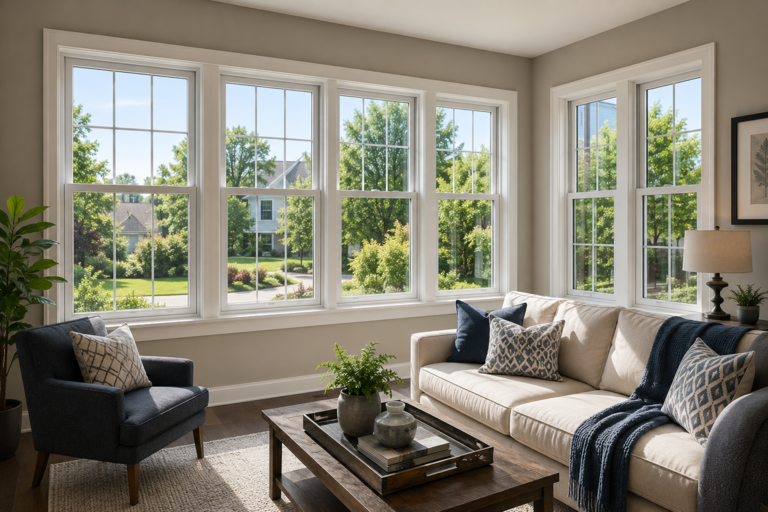
Energy-efficient windows can make a noticeable difference in how comfortable your home feels throughout the year. They help reduce drafts, limit unwanted heat transfer, and make it easier for your heating and cooling system to maintain a steady indoor temperature. Over time, better-performing windows may also help reduce the amount of energy your home needs.
Energy Advantage Roofing & Solar understands that home comfort is about more than keeping outdoor weather outside. The right window upgrade can improve everyday living by reducing cold spots, hot areas, glare, and outside noise while supporting more consistent indoor temperatures.
Short Answer
Energy-efficient Window Replacement can improve comfort and help lower utility bills by reducing air leaks and limiting heat transfer through the glass and frame. Modern windows can provide better insulation than many older units, especially when they are properly selected and installed. The result can be a more consistent indoor temperature, less strain on heating and cooling equipment, and a more comfortable home throughout the year.
How Energy-Efficient Windows Improve Home Comfort
Windows are one of the areas of a home where outdoor temperatures can have a strong effect on indoor conditions. If windows allow too much heat to enter or escape, rooms may feel uncomfortable even when the heating or cooling system is running.
Energy-efficient windows are designed to create a stronger barrier between the indoor and outdoor environments. Their glass, frames, seals, and construction work together to reduce unwanted heat movement.
Fewer drafts: Better seals can help prevent uncomfortable air movement around windows.
More even temperatures: Efficient windows can help reduce major temperature differences between rooms.
Less heat transfer: Improved glass can slow the movement of outdoor heat into or out of the home.
Better indoor comfort: Rooms can feel more stable instead of becoming excessively hot or cold.
Why Older Windows Can Increase Energy Use
Older windows may have worn seals, aging frames, single-pane glass, or other weaknesses that allow outdoor conditions to affect the interior. Even if a window still opens and closes, it may not perform as well as a modern energy-efficient unit.
When windows allow excessive heat transfer or air leakage, your heating and cooling system may need to work harder to maintain the temperature you selected.
Common Signs Of Aging Windows
Recognizing the signs of poor window performance can help you decide whether replacement is worth considering.
Noticeable drafts: You may feel outdoor air near the window even when it is closed.
Cold glass: Interior glass that feels unusually cold can indicate poor insulation.
Condensation: Frequent moisture between panes can signal a problem with the window unit.
Difficulty opening: Sticking, swelling, or damaged hardware can indicate an aging window.
Uneven room temperatures: Rooms near certain windows may feel warmer or colder than others.
What Makes A Window More Energy Efficient
Energy efficiency is not based on one feature alone. The glass, frame, seals, installation quality, and overall window design all affect performance.
Understanding these features makes it easier to compare replacement options without getting overwhelmed by technical terms.
Glass And Glazing
Modern window glass can be designed to reduce unwanted heat transfer while allowing natural light into the home. Multiple panes can also provide a better insulating barrier than traditional single-pane designs.
Frame Materials
The frame plays an important role because it surrounds and supports the glass. Different materials offer different levels of insulation, durability, and maintenance requirements.
Seals And Spacers
Good seals help prevent unwanted air movement and moisture from entering the window system. Strong construction around the panes can also support long-term performance.
Professional Installation
Even a high-quality window may perform poorly if it is installed incorrectly. Proper measurement, fitting, sealing, and finishing help the replacement window perform as intended.
How Replacement Windows Can Lower Utility Bills
One of the biggest reasons homeowners consider energy-efficient windows is the possibility of using less energy for heating and cooling.
When windows reduce unwanted heat transfer and air leakage, indoor temperatures may become easier to maintain. This can reduce the amount of work required from heating and cooling equipment.
The exact savings will depend on factors such as the home's existing windows, climate, insulation, window orientation, household habits, and heating and cooling system.
Reduced air leakage: Better seals can help limit the amount of conditioned air escaping through gaps.
Improved insulation: Efficient window designs can provide a stronger barrier against outdoor temperatures.
Less heating and cooling demand: More stable indoor temperatures may reduce the need for constant system adjustments.
Better energy management: Efficient windows can support the overall performance of an energy-conscious home.
Comfort Improvements You Can Notice Every Day
Energy efficiency is not only about utility bills. A window upgrade can also change how a room feels from morning to night.
For example, a room that becomes very warm from afternoon sunlight may feel more comfortable with better-performing glass. Likewise, a bedroom near an older drafty window may feel less chilly after the window is properly replaced.
More comfortable bedrooms: Better temperature control can make sleeping areas feel more pleasant.
Improved living spaces: Family rooms can feel more consistent throughout the day.
Less uncomfortable glare: Certain window options can help manage intense sunlight.
Reduced outside noise: Some modern window designs can also provide improved sound control.
Choosing The Right Windows For Your Home
Not every window is the same, and the best choice depends on where the window is located and what you want it to accomplish.
Consider the room, direction of sunlight, existing window condition, ventilation needs, appearance, and long-term maintenance before making a decision.
Think About Your Home's Needs
Start by identifying the problems you want to solve. You may be dealing with drafts, excessive heat, condensation, difficult operation, or simply outdated windows.
Consider Glass Performance
The type of glass and glazing system can influence insulation, sunlight control, and overall comfort. Ask questions about how different options may perform in your home's specific conditions.
Look At The Entire Window
Do not focus only on the glass. The frame, seals, hardware, and installation all contribute to the window's performance.
Review The Installation Plan
A proper installation should include accurate measurements, secure fitting, effective sealing, and attention to surrounding materials.
Window Replacement And Other Window Services
Not every window problem automatically means the entire unit needs to be replaced. In some situations, a smaller repair may address the issue. The right solution depends on the age, condition, and type of damage.
Homeowners may consider window repair and replacement when deciding between fixing an existing unit and upgrading it entirely.
For example, a minor hardware problem may be repairable, while a severely damaged frame or failing window system may make replacement more practical.
Repair: Useful when the window is generally sound but has a specific issue.
Replacement: Better suited to windows with major damage, poor performance, or extensive aging.
Inspection: Helpful when you are unsure whether repair or replacement makes more sense.
Understanding Glass-Related Problems
The glass is one of the most important parts of a window, but glass problems can vary significantly.
Broken, cracked, fogged, or damaged glass may require a targeted solution instead of complete window replacement. Window glass replacement can sometimes address a glass-specific problem while allowing the existing frame to remain in place.
However, if the frame, seals, or other components are also failing, replacing only the glass may not solve the larger performance issue.
Cracked glass: Damage should be assessed rather than ignored.
Foggy glass: Moisture between panes may indicate a failed seal.
Broken panes: Damaged glass can affect safety and comfort.
Aging frames: Glass replacement may not address problems with the surrounding structure.
Preparing For Weather-Related Window Damage
Severe weather can put additional stress on windows. Hail, strong winds, falling branches, and flying debris can damage glass, frames, screens, and seals.
If you are dealing with storm-related damage, it helps to understand the difference between temporary repairs and a complete replacement.
For more information about handling storm-related window concerns, you can also read this guide on storm window replacement in Colorado after hail damage.
Storm window repairs may be appropriate for certain types of damage, but the best solution depends on the condition of the entire window system.
Inspect the damage: Check the glass, frame, seals, screens, and surrounding area.
Address safety concerns: Broken glass or unstable components should not be left unattended.
Document visible damage: Photos and notes can help when discussing the problem with a professional.
Determine the full solution: Decide whether repair or replacement provides the better long-term result.
Steps To Plan A Successful Window Upgrade
Replacing windows does not have to be complicated. A clear process can make the project easier to understand and help you make decisions based on your home's needs.
Start by identifying the problems with your existing windows. Then consider the areas where comfort, energy performance, appearance, or operation could be improved.
Step 1: Inspect Existing Windows
Look for drafts, damaged frames, condensation, cracks, poor operation, and other signs of aging.
Step 2: Identify Your Main Goals
Decide whether your priority is comfort, energy efficiency, noise reduction, appearance, maintenance, or a combination of these factors.
Step 3: Compare Window Features
Review glass, frame, glazing, ventilation, and operating options before choosing a replacement style.
Step 4: Check Measurements
Accurate measurements are essential because the replacement unit needs to fit the opening correctly.
Step 5: Plan The Installation
Consider how the existing window will be removed, how the new unit will be fitted, and how the surrounding area will be sealed and finished.
Step 6: Review The Finished Work
After installation, check that the windows open, close, lock, and seal properly.
Common Mistakes To Avoid
Window replacement is a significant home improvement decision, so it is worth taking time to avoid common mistakes.
Choosing a window based only on appearance can lead to missed opportunities for better comfort and energy performance. Similarly, focusing only on the glass while ignoring the frame and installation can create problems later.
Ignoring drafts: Persistent air leakage should not be treated as normal.
Choosing only by appearance: Style matters, but performance should also be considered.
Overlooking installation: Proper fitting is essential for window performance.
Replacing without inspection: Understand the existing problem before deciding on a solution.
Ignoring surrounding areas: Moisture or damage around the window may point to a larger issue.
Pros And Cons Of Energy-Efficient Windows
Energy-efficient windows offer several potential advantages, but homeowners should also understand that every home improvement decision has trade-offs.
Pros
Better indoor comfort: Rooms may maintain more consistent temperatures.
Reduced drafts: Improved seals can help limit unwanted air movement.
Better energy performance: Efficient windows can reduce unnecessary heat transfer.
Improved appearance: New windows can refresh the look of a home.
Potential noise reduction: Some designs can help reduce outside sound.
Cons
Upfront investment: Replacement requires an initial home improvement investment.
Installation disruption: Existing windows need to be removed before new units are installed.
Different performance levels: Not every replacement window offers the same efficiency.
Maintenance still matters: New windows still need proper care to maintain performance.
A More Comfortable Home Starts With Better Windows
Your windows affect more than the appearance of your home. They influence indoor temperature, drafts, sunlight, energy use, and everyday comfort. If your existing windows are difficult to operate, letting in drafts, or making certain rooms uncomfortable, an upgrade may be worth considering.
Energy-efficient Window Replacement can provide a more effective barrier between your home and outdoor conditions while supporting better temperature control. The right combination of glass, frame, seals, and installation can help your windows perform more efficiently for years to come.
Energy Advantage Roofing & Solar can help homeowners understand their options and identify solutions based on the condition and needs of their property. Contact us today to discuss your window concerns and explore the next steps toward a more comfortable and energy-efficient home.