
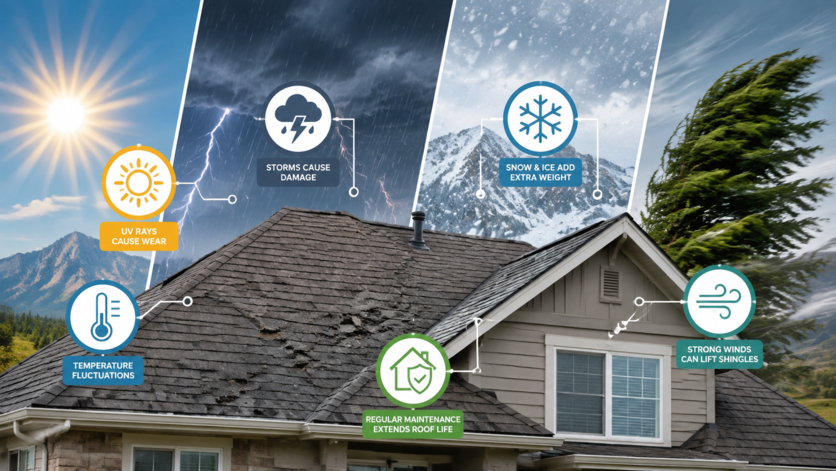
Your roof plays an important role in protecting your home from changing outdoor conditions throughout the year. From intense sunlight and strong winds to heavy snowfall and sudden storms, different weather patterns can affect roofing materials over time. Energy Advantage Roofing & Solar helps homeowners understand how local weather conditions influence roof performance and why regular care matters for long-term protection.
Many homeowners only think about their roof when a problem appears, but weather exposure happens every day. Understanding how seasonal changes impact your roofing system can help you recognize warning signs earlier and make smarter maintenance decisions.
How Changing Weather Conditions Affect Your Roof
Weather patterns can gradually impact the strength and condition of your roof. Constant exposure to outdoor elements may weaken materials, reduce durability, and create areas where problems can develop. Even when damage is not immediately visible, repeated weather stress can affect the overall performance of your roofing system.
Different seasons bring different challenges. Hot summer conditions can affect roofing surfaces, while winter conditions can create stress through freezing temperatures and moisture. Strong winds and storms may also contribute to wear that becomes more noticeable over time.
Learning how weather affects your roof helps you understand why regular inspections and maintenance are important. A proactive approach can help identify concerns before they become larger issues.
Common weather-related effects on roofing include:
Heat exposure can weaken roofing materials over extended periods.
Heavy rain may increase the risk of moisture-related issues.
Strong winds can loosen or damage exterior roofing components.
Snow and ice can create additional pressure on roofing systems.
Sudden temperature changes may cause materials to expand and contract.
Storm conditions can accelerate normal roof wear.
The Impact Of Extreme Temperature Changes
One of the biggest challenges roofs face is frequent temperature variation. Roofing materials naturally expand when temperatures rise and contract when temperatures fall. Over time, these repeated movements can affect the strength and flexibility of certain materials.
Warm weather can increase surface temperatures, while colder conditions can make materials less flexible. These changes may contribute to cracks, gaps, or weakened areas if the roof is already aging or has existing concerns.
Temperature changes are especially important because they often happen gradually. Homeowners may not notice the effects until signs such as leaks, damaged materials, or reduced roof performance appear.
Temperature-related concerns to watch for include:
Cracking caused by repeated expansion and contraction.
Weakening of roofing materials over time.
Gaps forming around flashing and seals.
Increased stress on older roofing systems.
Changes in roof appearance after seasonal shifts.
Reduced protection against future weather conditions.
Why Storms Can Create Long-Term Roofing Concerns
Severe storms can create immediate and hidden problems for residential roofs. Strong winds, heavy rainfall, hail, and flying debris may affect shingles, flashing, gutters, and other important roofing components.
Storm damage does not always appear serious at first glance. Small issues can allow moisture to enter gradually, which may lead to larger concerns if they are not identified early. Regular evaluations after severe weather can help homeowners understand the current condition of their roof.
Taking action after a major storm is especially important because weather-related issues can continue developing after the storm has passed.
For additional guidance on what steps to take after severe weather, read this helpful resource: What Should You Do in the First 24 Hours After a Denver Hailstorm?
Storm damage warning signs may include:
Missing or damaged shingles after strong winds.
Loose roofing materials around the property.
Water marks appearing inside the home.
Damaged gutters or exterior fixtures.
Excess granules collecting near drainage areas.
Visible changes in roof appearance.
The Importance Of Regular Roof Inspections
Regular inspections help homeowners understand how their roof is responding to ongoing weather exposure. A roof inspection can identify areas that may require attention before they develop into more serious concerns.
Many roofing issues remain unnoticed because they occur in areas that are difficult to see from the ground. Professional evaluations allow roofing specialists to examine important components and identify signs of wear, storm impact, or ageing.
Working with experienced professionals also helps homeowners create a better maintenance plan based on the condition of their specific roofing system.
Benefits of regular inspections include:
Identify developing problems before they become larger concerns.
Check roofing materials after severe weather events.
Improve awareness of overall roof condition.
Detect moisture concerns at an early stage.
Support better maintenance planning.
Help extend the useful performance of roofing materials.
How Wind And Moisture Affect Roof Performance
Wind and moisture are two common factors that influence roof durability. Strong winds can place pressure on shingles, flashing, and other exterior materials, while moisture can create problems when water finds small openings.
Consistent moisture exposure may affect roofing layers and surrounding areas of the home. When water enters areas where it should not, it can impact insulation, ceilings, and interior spaces.
Proper installation, regular maintenance, and timely attention to warning signs all help reduce the impact of wind and moisture on your roof.
Homeowners looking for reliable support from experienced roofing repair contractors should consider professionals who understand local weather challenges and roofing needs.
Ways to reduce wind and moisture concerns include:
Keep gutters clear to support proper water drainage.
Check roofing areas after major wind events.
Repair damaged materials before moisture enters.
Maintain flashing around roof openings.
Watch for signs of water intrusion indoors.
Schedule professional evaluations when concerns appear.
Protecting Your Roof During Snow And Winter Conditions
Winter weather can place additional stress on roofing systems. Snow accumulation, freezing temperatures, and ice formation can affect how well a roof performs throughout colder months. While roofs are designed to handle seasonal changes, proper care helps maintain their ability to protect your home.
Cold conditions can make certain roofing materials more vulnerable, especially when combined with moisture and repeated freezing and thawing cycles. Ice buildup near roof edges can also affect drainage and create additional concerns if not properly managed.
Preparing your roof before winter arrives and checking for issues after harsh conditions can help prevent avoidable problems. A well-maintained roof is better equipped to handle seasonal challenges.
Winter-related roof care practices include:
Remove debris that may block proper drainage.
Check for signs of moisture after snow events.
Monitor areas where ice buildup commonly occurs.
Keep attic ventilation working properly.
Inspect roofing materials after extreme weather.
Address small concerns before the next season arrives.
The Role Of Proper Maintenance In Roof Longevity
Regular maintenance helps your roof handle changing weather conditions more effectively. Since roofs experience constant exposure to sunlight, wind, rain, snow, and temperature changes, small maintenance steps can make a significant difference over time.
Ignoring minor concerns may allow weather-related problems to become more noticeable. A small damaged area can gradually affect surrounding materials, especially when exposed to repeated storms and moisture.
Many homeowners benefit from working with trusted residential roof repair companies that can evaluate their roofing system and provide guidance based on its current condition.
Important maintenance steps include:
Schedule inspections after major weather events.
Keep gutters and drainage systems functioning properly.
Replace damaged roofing components when needed.
Check seals around vents and roof openings.
Monitor changes in roof appearance.
Maintain proper attic conditions throughout the year.
Choosing The Right Solutions for Weather-Related Roof Issues
When roofing concerns appear, choosing the right solution depends on the type and condition of the damage. Some situations may require minor attention, while others may involve larger improvements to restore proper protection.
Homeowners should avoid delaying necessary repairs because weather exposure can continue affecting weakened areas. Addressing concerns early allows professionals to determine the most suitable approach for maintaining the roof.
Finding dependable professionals who understand local weather patterns can make the process easier. Experienced teams can evaluate storm impacts, material conditions, and overall roof performance before suggesting the next steps.
For homeowners seeking affordable roof repair, it is important to focus on quality solutions that support long-term protection rather than only addressing visible problems.
Factors to consider when planning roof solutions include:
The current age and condition of the roofing system.
The type of weather-related damage present.
The condition of surrounding roofing components.
The expected performance of existing materials.
The level of protection needed for future seasons.
The recommendations provided after inspection.
When A Roof Replacement May Become Necessary
Every roof has a natural service life, and continuous exposure to changing weather can eventually affect its ability to protect a home. While maintenance and repairs can support roof performance, some roofing systems may eventually require replacement.
A roof replacement decision should be based on factors such as material condition, damage level, and overall performance. Homeowners should look for signs that repairs may no longer provide the protection their property needs.
Choosing residential roof replacement when appropriate can help restore confidence in the home's protection and prepare the property for future weather conditions.
Possible signs that replacement may be needed include:
Frequent repair needs throughout the year.
Extensive weather-related deterioration.
Aging materials with reduced performance.
Repeated moisture concerns inside the home.
Visible widespread damage across roofing areas.
Reduced ability to protect against seasonal conditions.
Keep Your Roof Ready For Every Season
Weather will always play a major role in how your roof performs. From summer heat and strong storms to winter snow and temperature changes, every season creates different challenges that homeowners should understand.
Taking a proactive approach through inspections, maintenance, and timely solutions helps protect your home and improve roof performance over time. Small steps today can help reduce the impact of future weather conditions and provide greater confidence in your roofing system.
Energy Advantage Roofing & Solar understands the importance of helping homeowners protect their properties through changing weather conditions. With proper attention and professional support, your roof can remain a reliable barrier against the elements throughout the year. Contact us today to learn more about maintaining your roof, identifying weather-related concerns, and finding the right solution to protect your home through every season.