
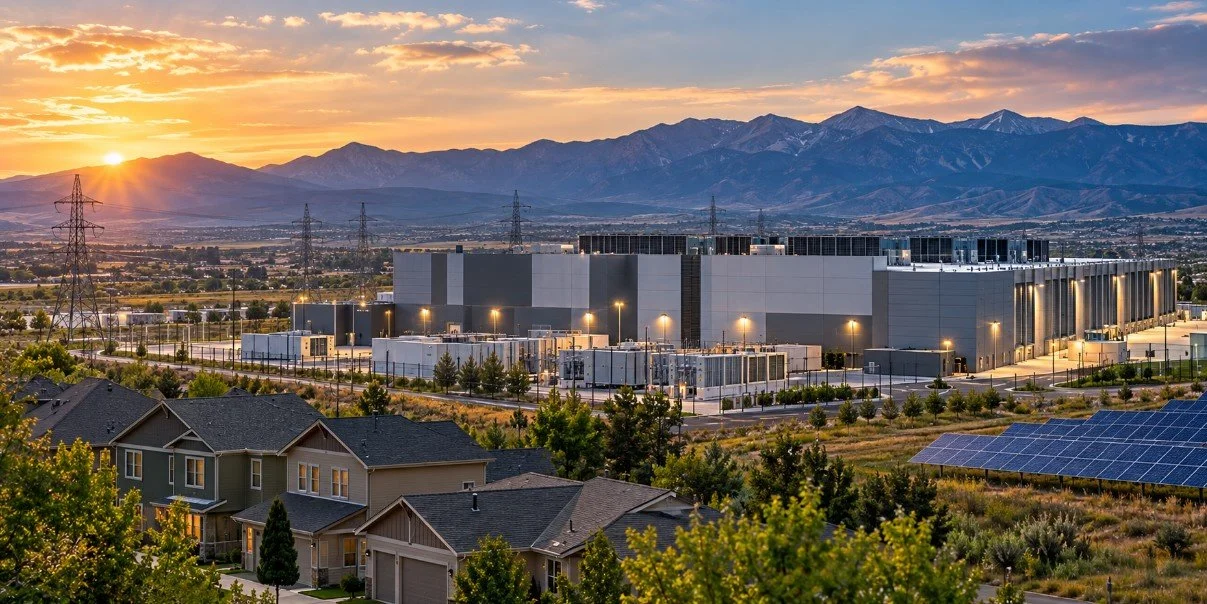
AI data centers are increasing electricity demand as businesses rely on powerful computing systems to run artificial intelligence applications. In Colorado, this growing demand could contribute to pressure on electricity rates if additional power generation, transmission lines, substations, and other infrastructure are needed. However, the actual impact on residential bills will depend on utility planning, regulatory decisions, project-specific costs, and how those expenses are allocated. Energy Advantage Roofing & Solar helps homeowners explore practical ways to manage household electricity use as the energy landscape changes.
Can AI Data Centers Increase Electricity Rates in Colorado?
Yes, AI data centers could contribute to higher electricity rates in Colorado, but the outcome is not guaranteed. These facilities can consume substantial amounts of electricity, particularly when operating large numbers of servers and cooling systems around the clock. If electricity demand grows faster than available supply, utilities may need additional infrastructure to maintain reliable service.
The potential effect on homeowners depends on several factors:
Electricity demand: More data centers can increase the amount of power needed across a utility's service area.
Infrastructure investment: Utilities may need to expand generation, substations, and transmission capacity to meet new demand.
Cost allocation: Regulators determine how approved utility expenses are recovered and which customer groups may pay them.
Energy supply: The availability of existing generation, renewable energy, storage, and other power resources can influence future requirements.
Colorado electricity rates are also affected by other factors, including fuel costs, wildfire mitigation, transmission improvements, and broader utility investment. AI data centers should therefore be considered one potential source of future demand rather than the sole explanation for rising residential bills.
Why Do AI Data Centers Need So Much Electricity?
AI data centers contain computing equipment that processes information, trains artificial intelligence models, and supports applications used by businesses and consumers. These systems can operate continuously, creating a substantial and relatively steady demand for electricity.
Cooling is another important part of their energy use. Servers generate heat during operation, and facilities need suitable cooling equipment to maintain reliable performance. The electricity required by an individual data center depends on its size, computing workload, equipment efficiency, and cooling design.
Several features help explain their energy requirements:
High-performance computing: AI workloads can require powerful processors that consume significant amounts of electricity.
Continuous operations: Many data centers run throughout the day and night rather than operating only during business hours.
Cooling requirements: Cooling systems help prevent overheating and protect computing equipment.
Supporting infrastructure: Networking equipment, power distribution systems, and backup arrangements also contribute to facility requirements.
Not every data center has the same energy footprint. Efficient equipment, improved cooling, and careful power management can reduce electricity use per unit of computing activity. Nevertheless, the combined demand from multiple facilities can become an important consideration in long-term electricity planning.
What Electricity Infrastructure Does Colorado Need to Support Data Centers?
When a large data center connects to the electricity grid, the existing network must be able to supply its expected demand reliably. Depending on the project's location and size, additional infrastructure may be necessary. This does not mean every project automatically requires a new power plant or major transmission expansion.
Potential infrastructure requirements include:
Power generation: Additional electricity supply may be needed if existing resources cannot meet projected demand.
Transmission lines: High-voltage lines may need upgrades or expansion to move electricity to areas experiencing growth.
Substations and distribution equipment: Local electrical infrastructure may require improvements to handle new loads safely.
Grid management systems: Utilities may need improved monitoring, planning, and operational tools to maintain reliability.
Energy storage and flexible demand: Batteries and other resources may help manage periods of high demand, depending on the system design.
Colorado utilities must consider data center demand alongside residential growth, commercial development, electric vehicles, and other changes in electricity consumption. The timing and location of new demand matter because infrastructure requirements differ across service areas.
Homeowners should also distinguish between a proposed data center and an operating facility. Announced projects, construction plans, and actual electricity consumption represent different stages of development and should not be treated as equivalent when evaluating potential rate impacts.
Will Colorado Homeowners Pay for Data Center Infrastructure?
Whether homeowners pay some of the costs associated with data center infrastructure depends on the utility's rate structure, applicable regulations, project agreements, and decisions by regulators. A large electricity customer may be required to cover certain costs directly, but the specific arrangements vary by project and jurisdiction.
Colorado's Public Utilities Commission and relevant utility proceedings are important sources for understanding how proposed investments and customer charges are reviewed.
Homeowners should pay attention to these considerations:
Utility rate cases: Review whether proposed rate changes include infrastructure investments connected to growing electricity demand.
Large-customer agreements: Examine whether specific arrangements assign certain costs to the data center customer.
Regulatory protections: Check whether regulators have established conditions intended to protect residential customers from inappropriate cost allocation.
Actual filings and decisions: Distinguish approved charges from proposed expenses, forecasts, and public commentary.
It would be inaccurate to assume that data center operators always pay every associated grid cost. It would be equally inaccurate to assume that residential customers will automatically bear those costs. The answer depends on documented project arrangements and regulatory decisions.
For this reason, homeowners should look for evidence in official filings rather than relying solely on broad claims about artificial intelligence and electricity bills.
How Could Growing Electricity Demand Affect Colorado Utility Bills?
Increasing electricity demand can affect utility planning over time. If utilities need to build or upgrade infrastructure, the associated expenses may influence future rates. However, the effect on an individual household depends on several variables, including how much infrastructure is required, when it is built, how costs are recovered, and whether additional electricity sales help offset expenses.
For Colorado homeowners, the main issues to monitor include:
Future rate adjustments: Watch for approved changes in electricity rates and the reasons provided by utilities and regulators.
Generation availability: Consider whether sufficient electricity supply is available to meet projected demand.
Infrastructure spending: Look for documented investments in transmission, substations, and other grid equipment.
Demand management: Follow developments involving energy efficiency, storage, and other approaches that may help manage peak electricity use.
The distinction between electricity demand and electricity prices is important. Higher demand does not automatically produce an immediate rate increase. The outcome also depends on available supply, infrastructure capacity, energy procurement, regulatory policy, and investment decisions.
Homeowners should therefore avoid treating every increase in an electricity bill as evidence that data centers are responsible. Reviewing utility notices and comparing actual usage with previous billing periods can help identify more immediate reasons for a change.
What Can Colorado Homeowners Do to Manage Electricity Costs?
Homeowners cannot control data center development, wholesale energy markets, or utility rate proceedings. They can, however, take steps to understand their electricity use and potentially reduce the amount of power they purchase from the grid.
A practical starting point is to review household consumption and identify opportunities to improve efficiency.
Monitor electricity usage: Compare monthly bills and review kilowatt-hour consumption, not just the amount owed.
Improve home efficiency: Seal air leaks, improve insulation where appropriate, and use efficient lighting and appliances.
Review heating and cooling: Proper maintenance and suitable temperature settings can help reduce unnecessary energy use.
Consider solar energy: A suitable solar system may generate electricity for household use and reduce reliance on purchased power.
Evaluate battery storage: Batteries can store eligible energy for later use, depending on system configuration and operating conditions.
Understand utility billing rules: Fixed charges, time-of-use rates, export compensation, and other terms can influence the benefits of energy improvements.
When comparing solar installation companies, homeowners should evaluate system design, equipment quality, installation standards, warranties, monitoring capabilities, and the assumptions used in projected savings. A proposal should reflect the property's electricity consumption, roof conditions, utility rules, and expected solar production rather than relying on generic estimates.
Solar is not a complete solution to every household energy expense. It primarily reduces exposure to purchased electricity when the system produces usable power. It does not directly protect homeowners from gasoline prices, natural gas prices, or interest-rate changes.
Battery storage can increase the amount of self-generated solar electricity used at home and may provide backup power when the system is designed for that purpose. Actual savings and backup capabilities depend on the equipment, system configuration, utility rules, and household needs.
How Do Solar, Roofing, and Battery Solutions Fit Into the Bigger Picture?
As electricity demand changes, homeowners may benefit from assessing their property's energy performance before investing in major improvements. Solar panels, efficient roofing, and battery storage can work together, although the right combination depends on the home and its energy requirements.
Roof condition is particularly important when planning solar. A roof should be evaluated for its condition, remaining service life, shading, and suitability for panel placement before installation begins. Coordinating solar energy roofing decisions with necessary roof repairs can help homeowners avoid unnecessary disruption later.
Consider these practical steps:
Assess roof condition first: Identify damaged shingles, potential leaks, and other issues that could affect a solar installation.
Review solar production estimates: Understand how roof orientation, shading, panel placement, and seasonal conditions influence generation.
Plan future roof work: If roofing repairs or replacement may be necessary, discuss the implications for removing and reinstalling solar equipment.
Understand maintenance requirements: Ask about inspections, system monitoring, equipment warranties, and procedures for servicing the installation.
If roofing work becomes necessary after panels have been installed, a solar panel reset may be required. This generally involves coordinating panel removal and reinstallation with the roofing work, along with appropriate electrical checks and system testing. Homeowners should use qualified professionals who understand both roofing and solar equipment to help protect the system and maintain safe operation.
These improvements will not prevent electricity rates from changing. Instead, they can give homeowners more control over energy efficiency, on-site electricity generation, and how much solar power they use directly.
What Should Colorado Homeowners Watch for Next?
The long-term impact of AI data centers on Colorado electricity rates will become clearer as projects progress, electricity demand forecasts change, and regulators review utility plans. Homeowners should focus on verified developments rather than relying on predictions alone.
The following information can help homeowners stay informed:
Colorado Public Utilities Commission decisions: Follow approved rate changes and decisions concerning infrastructure investment.
Utility planning documents: Review electricity demand forecasts, proposed upgrades, and explanations of future resource needs.
Data center announcements: Distinguish confirmed projects from proposals and examine whether expected electricity requirements have been disclosed.
Grid investment plans: Look for details about generation, transmission, and distribution improvements.
Household energy trends: Track changes in personal electricity consumption and evaluate practical efficiency improvements.
The most useful approach is to revisit this information when meaningful new filings, rate decisions, or project announcements become available. Current evidence can help homeowners understand whether potential demand growth is translating into actual changes in electricity costs.
Explore Energy Options for Your Colorado Home
AI data centers could contribute to rising electricity demand in Colorado, but their effect on residential rates will depend on infrastructure requirements, utility decisions, regulatory protections, and the allocation of project costs. Homeowners should not assume that every rate increase is connected to data centers.
Understanding household electricity consumption is a more immediate step toward managing energy use. Efficiency improvements, suitable solar systems, and battery storage may help reduce reliance on purchased electricity, depending on the home's needs and utility arrangements.
Energy Advantage Roofing & Solar can help Colorado homeowners explore roofing, solar, and energy solutions suited to their properties. Contact us today to discuss your home's energy needs and learn which options may be appropriate for your situation.